AIC staff will NEVER ask you to transfer money or disclose bank log-in details over a phone call. Call the 24/7 ScamShield Helpline at 1799 when in doubt.
What is Self-Care
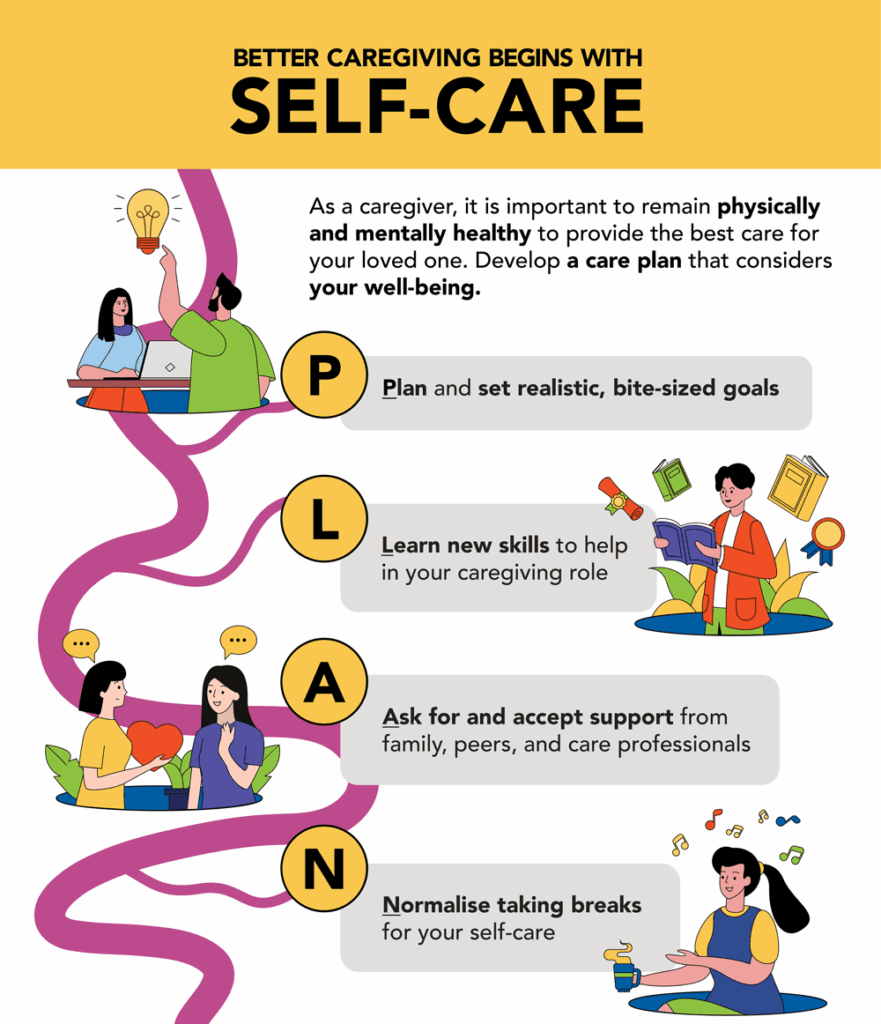
Caring for your loved one is important, but it is equally as important to look after yourself. Self-care means taking responsibility to care for yourself through the decisions you make. This includes anything you do to keep yourself healthy and happy, be it physically, mentally or spiritually. At times, you may also need to work with health and social care professionals.
While most caregivers recognise the importance of self-care, it is often the first thing to be neglected when you find yourself in challenging situations. You can start your self-care routine with a PLAN:
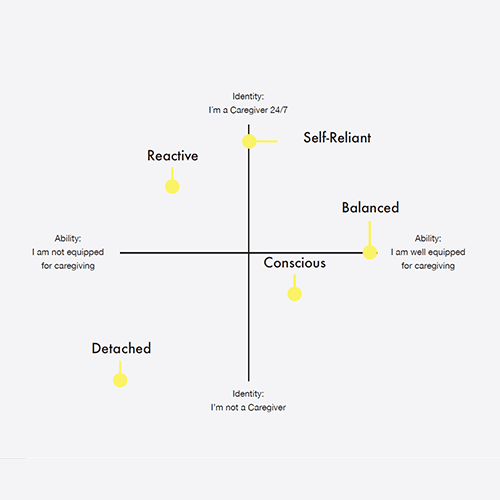
Have you ever had this question: “What kind of a caregiver am I?”
By understanding the kind of caregiver you are, you can better understand how you view caregiving and self-care. This also gives you some insights on what are the things you would need to look out for. Below are 5 different kinds of caregivers whom you may identify yourself with:
Unable to take care of their own needs as they put loved ones’ needs above their own
Gets less and less resilient with each crisis
Does not positively embrace the role and identity as a caregiver
Plans for the future in a way that only addresses immediate needs or problems as they come
Lacks effective strategies and skills to be a better caregiver
At high risk of burning out, or becoming a care recipient
The Balanced Caregiver
Seeing the good in everything
Balances their identity, both as a person and a caregiver
Attends to each set of needs and roles seamlessly
Accepts caregiving, and embraces all experiences as a catalyst for personal growth
Balances current needs with planning for what might come in the future
Takes time to take care of themself by developing a trustworthy support network
Activates this caregiving network to provide continuous and holistic care for their loved one
Puts in place strategies to minimise uncertainty which helps to uplift caregiving experiences
The Self-Reliant Caregiver
Tolerating and comfortable
Succumbs to society’s idealisation of being self-reliant
Micro-manages their loved ones’ needs
Unable to seek more help to balance and attend to their own needs
Knowingly and willingly taken on the identity and role of caregiver so much so that the role has taken over their personal identity
Tends to neglect their own well-being
May face identity loss should they lose their caregiving role one day
Focuses on the present, failing to adopt more efficient and balanced ways of doing things in the future for their loved ones and own self
Has the motivation and skills to seek help, but struggles to identify the more suitable support for their needs
Perceives that everything is taken care of, and assumes no improvements are necessary
In reality, only immediate financial matters might be taken care of, while other aspects of caregiving are brushed aside
The Conscious Caregiver
Aspiring to be better
Caregiving was unexpected, but they adapt to take care of their loved one, even if their personal plans are disrupted
Aware that they need to take care of their own needs so that the caregiving role can be sustained
This adaptability allows them to shift between their caregiver and personal identity
Struggles with sharing caregiving within their families, and may have trouble navigating the social care system
Recognises that caregiving has positive and negative aspects
Confident that a positive attitude towards learning can lead to a better future for themselves and their loved ones
Conscious of the future and intends to plan but have not acted on it yet
Capable of seeking and receiving support
The Detached Caregiver
Passive and detached
No attitude towards caregiving
Lack awareness that care needs to be provided
Not involved in their loved one’s day-to-day activities, believing care is unnecessary
May be in denial of their loved one’s condition, or struggle to understand what it means to love or live with someone who has care needs
May have their own health concerns to worry about
Rooted in their ways, unable to consider switching their mindset or behaviour
Leaves the future completely out of their hands
May believe that everything happens for a reason and tends not to complain
May struggle to articulate their problems to others
What happens then is that their loved ones are left to manage worries about the present and future on their own
We understand that caregiving can be a complex and challenging journey. It is common to feel stuck in your current approach or to react to challenges as they arise. Recognising that you don’t have to navigate this path alone is an important step. By exploring new perspectives and strategies, you can take control of your caregiving experience. If you’re feeling anxious or overwhelmed, seeking support can help you build confidence and resilience. Together, we can work towards a more fulfilling experience for both you and your loved ones.
If you recognise yourself in one of the caregiving styles above, here are some questions you can ask yourself:
Am I caring in a way I want to care? Or would I rather have a different caregiving style?