
We are aware of incorrect information about AIC’s financial assistance schemes being circulated. Always verify details on our website first. If in doubt, contact AIC directly.
ElderFund
Monthly cash support for needy, severely disabled Singaporean seniors who cannot benefit from other financial assistance schemes.

Highlights
 Up to $250 a month
Supports those who cannot benefit from CareShield Life
Supports those who have fully claimed ElderShield or IDAPE
Can be used to pay for care needs
Key criteria
 Singapore Citizen aged 30 and above
Must have severe disability
Monthly household income per person is $1,500 or less
MediSave balance below $10,000
Full details below.
Introduction
ElderFund is a discretionary government assistance scheme to support lower-income, severely disabled Singapore Citizens aged 30 and above with their long-term care needs.
The payout can be used for long-term care needs, such as hiring a helper, paying for care services or daily expenses.
How to qualify
There are a few criteria your loved one will need to meet to qualify for ElderFund.
| Criteria | Description |
|---|---|
| Care recipient's nationality and age | He/ she must be a Singapore Citizen aged 30 and above. |
| Care recipient's residence | He/ she must live in Singapore. |
| Care recipient's household income | He/ she must meet the mean-test criteria for ElderFund:
AND
Applications from Singaporeans who do not meet this criterion, but are unable to afford the long-term care needed, will be considered on a case-by-case basis. |
| Care recipient's needs | He/ she must:
|
| Care recipient’s eligibility for other schemes | He/ she must not be:
|

How the scheme works
If you qualify, you can receive up to $250 cash a month for as long as you meet the criteria.
After you submit your application, we may take up to four weeks to process it. You will be informed about the outcome in writing via mail.
Once approved, payouts will be made to the nominated bank account in the following month. This may include payouts from the month the application was submitted. The payouts will be reflected as “ElderFund” in your bank statement.
In the event of any conflict, inconsistency or domestic dispute regarding the nominated bank account, the payouts may be suspended or ceased.
If you have submitted a new application to apply for new schemes or update your existing schemes with AIC, we may update your nominated bank account to the latest bank account details provided in your submission.
How to apply
There are several ways you can apply for ElderFund.
Apply online using Singpass (recommended)
This is done via AIC’s e-Services for Financing Schemes (eFASS). We recommend this method as the approval waiting time is shorter.
Read the terms and conditions before you start.
Please read here if you are applying for the grant on behalf of someone who lacks mental capacity.
Seek assistance from the nursing home your loved one is staying in
If you are applying for ElderShield to help you offset the cost of the nursing home fees, you can ask the service provider to help. You can nominate the payout to be made directly to the nursing home.
Apply via hard copy
Email apply@aic.sg to obtain a copy of the application form or visit any AIC Link.
We seek your understanding that hardcopy applications take a longer time to process.
Documents needed
The full details of what is needed are available on eFASS.
If you are submitting on behalf of someone who lacks mental capacity, you will need to prepare additional documents. We will inform you if other documents are required.
FAQs
FAQs
Household monthly income per person is a criterion used for means-testing. (“Household” refers to the NRIC address)
It is calculated as the total gross household monthly income divided by the total number of family members living together in the household. Gross monthly household income includes basic employment income, trade/self-employed income, overtime pay, allowances, cash awards, commissions, and bonuses.
To check or update your household information for means-testing, please use the MediShield Life Household Check e-Service. Alternatively, you can call the Medishield Life Hotline at 1800 222 3399.
He/ she will need to see an MOH-accredited severe disability assessor who will determine their disability level.
There is an assessment fee you will need to pay first, which will be reimbursed if your loved one is assessed to be severely disabled.
If he/ she is found to have mild or moderate disability instead, there are other financial assistance schemes that you can turn to for help, like the Home Caregiving Grant or MDW Levy Concession. Please find out more about the other financial assistance schemes here.
The cost of the assessment ranges from $100 (if you visit the assessor’s clinic) to $250 (if the assessor needs to do a home visit).
You will need to pay the assessment fee first to the assessor. The amount will be reimbursed if your loved one is assessed to be severely disabled.
The assessment must be done by a MOH-accredited severe disability assessor.
You will need to contact an MOH-accredited severe disability assessor to book an appointment and bring along any relevant supporting documents (eg medical records).
Your regular doctor of therapist may not have been trained by MOH to carry out the SDA. That is why you need to be assessed by an MOH-accredited severe disability assessor.
Please check if your doctor or therapist is on the approved list of assessors. If they are not, please make an appointment with another assessor from the list.
You can apply on behalf of your loved one as long as:
- You are the appointed Donee (appointed under the Lasting Power of Attorney) or Deputy (appointed under the Mental Capacity Act) authorised to make decisions on his/ her property and affairs.
- If your loved one does not have a Donee or Deputy, you can apply on his/ her behalf if you are an immediate family member (parent, spouse or child. Otherwise, you can only apply on his/ her behalf if the immediate family members are unable to do this (eg deceased, lack mental capacity or other issues). For successful applications without a donee/ deputy, the caregiver or another family member has 12 months to obtain a court order appointing him/ her as a deputy, failing which the payouts will be suspended. Do visit the Singapore Courts website to find out how to apply for a deputyship.
- You may need the following documents:
-
Recent medical report stating that he/ she lacks mental capacity
OR
Doctor’s certification that he/ she lacks mental capacity- If the care recipient is also going for a disability assessment, you must ask if the doctor can do a mental capacity assessment (using this form) at the same time.
- The doctor’s certification is valid for six months, unless stated as permanent.
OR
Court order of deputy appointment - Copy of bank book or statement if the bank account nominated to receive the grant belongs to a deputy or trustee.
-
No, as such conditions affect people’s ability to carry out the six activities of daily living at different levels.
In order to qualify for ElderFund, your loved one still needs to undergo a disability assessment by a MOH-accredited severe disability assessor. The assessor will consider the impact of your loved one’s cognitive challenges as part of the assessment.
This may sometimes be required to confirm if your loved one still meets the qualifying criteria. You will be informed by mail if this is needed. The re-assessment fees are waived regardless of the outcome.
If your loved one has been assessed as permanently severely disabled, he/ she will not need future re-assessments, unless new information suggests that his/ her condition has improved.
Yes, you can reapply and receive ElderFund payouts again if your loved one is assessed to meet all the eligibility criteria.
To change scheme details
Log in with Singpass on eFASS. Go to “Manage My Schemes” > “Change in Scheme Details.”
If you are updating the details for someone who lacks mental capacity for the first time, please read here.
To change the payee to a nursing home that the care recipient is living at
If you are using the ElderFund to offset the cost of the nursing home fees, you can ask for the payout to be made directly to the nursing home.
For this change in payee, please approach the nursing home your loved one is residing at to help you submit the “Change in Application Details” Form to AIC.
Do keep a copy of the application documents for your own reference.
To stop receiving payouts
Log in with Singpass on eFASS. Go to “Manage My Schemes” > “Change in Scheme Details.”
If you are unable to do any of the above online, email apply@aic.sg to obtain a copy of the application form or visit any AIC Link. We seek your understanding that hardcopy applications will require a longer approval waiting time.
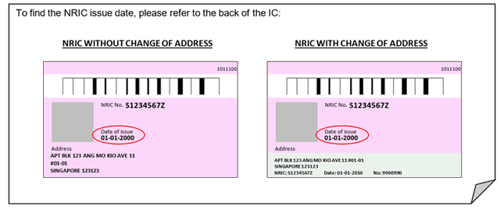
AIC needs the NRIC issue date for verification. You can find it on the back of your NRIC card.
ElderFund supports Singapore Citizens who are not:
- A CareShield Life or ElderShield policyholder / supplement plan policyholder
- An active recipient of CareShield Life or ElderShield (including supplement claims)
- Eligible for or currently receiving payouts from Interim Disability Assistance Programme for the Elderly (IDAPE)
It also seeks to support Singapore Citizens who have low MediSave balances (ie less than $10,000). This means that the amount that they are able to draw from MediSave will not be the full $200 monthly sum allowable under MediSave Care.
Singapore Citizens who are unable to meet their long-term care costs, even after receiving payouts under ElderShield/ CareShield Life, MediSave Care (from himself or his spouse) or IDAPE, may be considered for ElderFund on a case-by-case basis.
Please speak to a medical social worker or AIC for advice.
IDAPE and PioneerDAS are for specific groups of older Singaporeans.
ElderFund benefits a wider group of Singaporeans as the age criteria is set at 30 years and above who meet the scheme’s eligibility criteria. To find out who qualifies, please read here.
MediFund supports patients (regardless of disability) who are unable to cope with medical bills. ComCare provides social & medical assistance to low-income individuals or families. ElderFund specifically supports severely disabled, low-income Singaporeans aged 30 and above who meet the scheme’s eligibility criteria with their long-term care needs (eg to pay nursing home fees, home care expenses, etc).
Government-funded safety nets such as MediFund and ComCare support Singaporeans who are unable to pay for their care even after government subsidies and other means of support.
If you have challenges meeting your long-term care needs, please approach a social worker (eg with your long-term care provider or the Ministry of Social and Family Development (MSF) for help. You can also speak to AIC for advice.
MOH and MSF work closely together to ensure that needy Singaporeans do not undergo unnecessary hurdles in seeking assistance for their healthcare, long-term care and daily living expenses.
No. You will need to apply for ElderFund separately as there are some criteria that can be considered on a case-by-case basis.
No. ElderFund’s eligibility criteria are stricter as it is a severe disability scheme.
If your loved one is eligible for ElderFund, you may apply for PioneerDAS or HCG without going for a separate assessment (if you meet those schemes’ criteria).
If you do not meet ElderFund’s criteria but need help with long-term care costs, please contact AIC.
The payout is set to help lower-income Singaporeans with basic long-term care needs, and is similar to IDAPE’s payout. The government will review the scheme to ensure it stays relevant.
If you still need help with your care costs after tapping on various Government subsidies, you can apply for financial assistance through Government-funded safety nets such as MediFund or ComCare.
ElderFund payouts are set by the government and may be reviewed over time. There is no cap on payout duration as long as you remain eligible.
Visit SG Enable’s Enabling Guide, an online resource for persons with disabilities and their caregivers, as well as professionals looking for disability support.