
Understanding Your Learning Needs

Caregiving is a continuous learning journey that requires adapting to new challenges at various stages. By engaging in learning, you can acquire valuable tools and insights that enhance your resilience and enrich your experience as a caregiver. This enables you to fully embrace the opportunities for growth that each new phase presents.
To support you at the start of your caregiving journey, there is a free e-learning course you can take to help build confidence and develop essential caregiving coordination skills.
A caregiver is a person who has taken on the responsibility of looking after someone who is unable to care for himself or herself fully due to illness, frailty, disability or a mental health condition. This person could be a family member, partner, relative, friend, or neighbour.
What do I need to do as a caregiver
You may have become a caregiver following your loved one’s diagnosis of a medical condition, or after they had an incident such as a fall or a heart attack.
As such, you might be wondering what your caregiving responsibilities are and what you are supposed to do when it comes to looking after your loved one. For a start, here is an overview of what your caregiving journey looks like, as shown across the three stages:
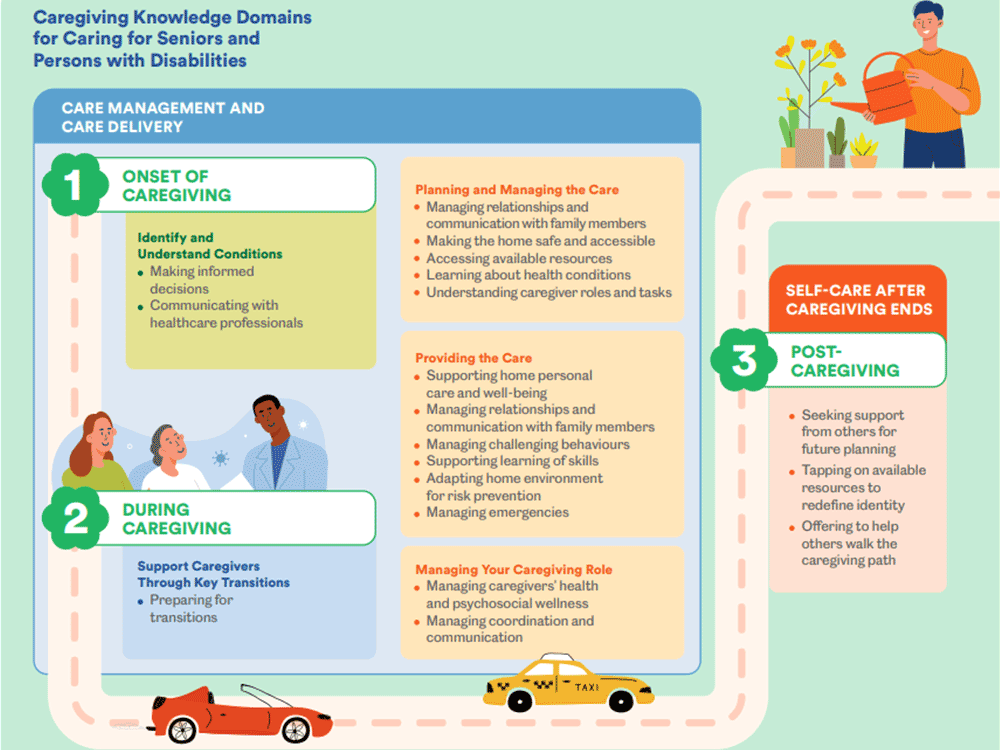
Source: Learning Guidebook (For Caregivers, pages 2-3)
Your degree of involvement as a caregiver will vary according to the needs of your loved one which can be broadly categorised as follows:
| Type of needs | Example of tasks |
|
Physical
 |
Helping your loved one get dressed, or walk, and conducting household tasks such as grocery shopping and doing chores. |
|
Health and Medical
 |
Ensuring your loved one is exercising, getting a balanced meal, and taking their prescribed medications on time. |
|
Emotional and Psychosocial
 |
Providing a listening ear and expressing love and support for your loved one. Finding and connecting them with support in the community. |
|
Spiritual
 |
Helping your loved one practise any rituals or celebrate important religious dates. Your loved one’s religion can be their source of encouragement and comfort at this time. |
|
Financial and Legal
 |
Managing daily expenses, their insurance, assets and finances for their future. |
|
Future care
 |
Planning for your loved one’s future care needs and arrangements should they lose mental capacity. This includes completing an Advance Care Plan and Lasting Power of Attorney. Find out more on about other ways to plan ahead. |
Caregiving skills to learn through training
In meeting the various needs of your loved one, here’s an overview of what you can learn and do within two main caregiving skills domains: Care Management and Care Delivery.
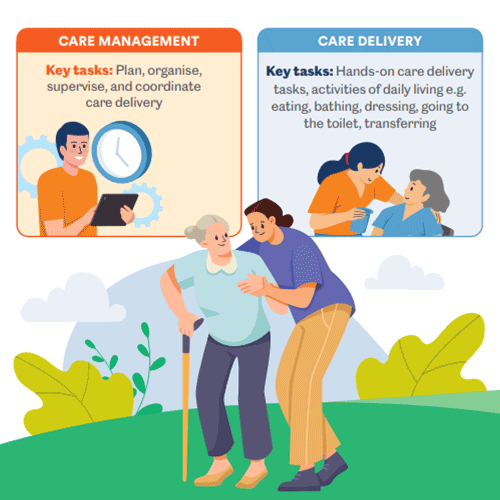
Source: Learning Guidebook (For Caregivers, page 4)
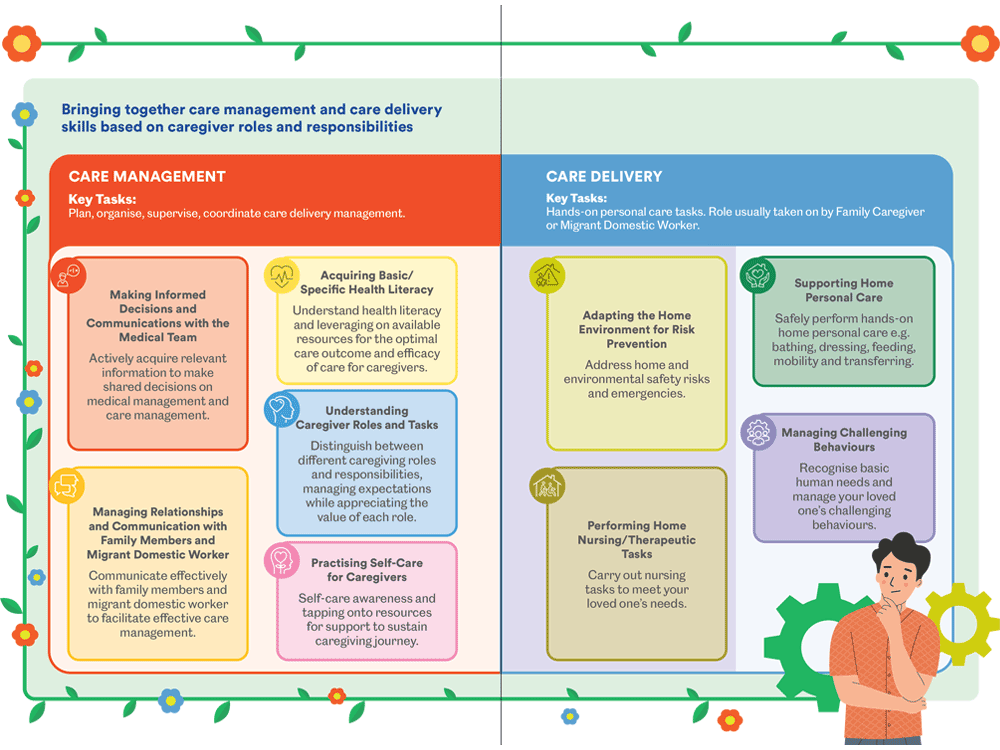
Source: Learning Guidebook (For Caregivers, pages 6-7)
You can refer to the Learning Guidebook (For Caregivers) to know more about the caregiving skills required. If you are caring for a loved one with disability or special needs, you can also explore the Caregiver Learning Roadmap for essential resources and guidance.
Caregivers who wish to equip themselves with caregiving skills and knowledge can tap on Caregivers Training Grant (CTG). Eligible beneficiaries will start off with a $400 Caregivers Training Grant amount, with an annual $200 top up and unused monies can be carried forward, capped at $400 every financial year (from April to March the following year). As CTG is tagged to the care recipient, it can be shared among yourself, your other family members and Migrant Domestic Worker (MDW) who are looking after your loved one.
Tips for caregivers
Being prepared can help you feel more confident as you take up the caregiver role. Here are some tips to guide you on your caregiving journey:
- Understand your loved one’s condition, treatment, management and progression. Do also consider his/ her care preferences and to include him/ her in the planning and decision-making process.
- Knowing who and where to seek help from can reduce uncertainties and avoid caregiver burnout.
- Recognising your own needs and capabilities as a caregiver helps you to find a balance between work, caregiving and your personal time.
- Bring your family members together to discuss the care arrangement and share the caregiving load.
For instance, one family member could be handling financial affairs and another providing daily care. Knowing their preferences for certain tasks can make assigning roles easier, and reduce caregiving stress.